

How Often Should You Rotate Tires: Extend Lifespan, Safety & Performance
Tire rotation is one of the simplest yet most effective maintenance steps to keep your vehicle running safely and efficiently. Knowing how often you should rotate tires helps ensure even tread wear, smoother handling, and longer tire life — saving money in the long run.
What Is Tire Rotation
Tire rotation means moving each tire to a different position on your vehicle at specific intervals. Since tires wear differently depending on their position (front, rear, left, or right), rotation helps equalize tread wear and improve balance.
For example:
- Front tires wear faster on front-wheel-drive cars because they handle both steering and engine power.
- Rear tires on rear-wheel-drive or all-wheel-drive cars may experience heavier wear during acceleration.
Rotating tires ensures that all four wear evenly and last as long as possible.
How Often Should You Rotate Tires
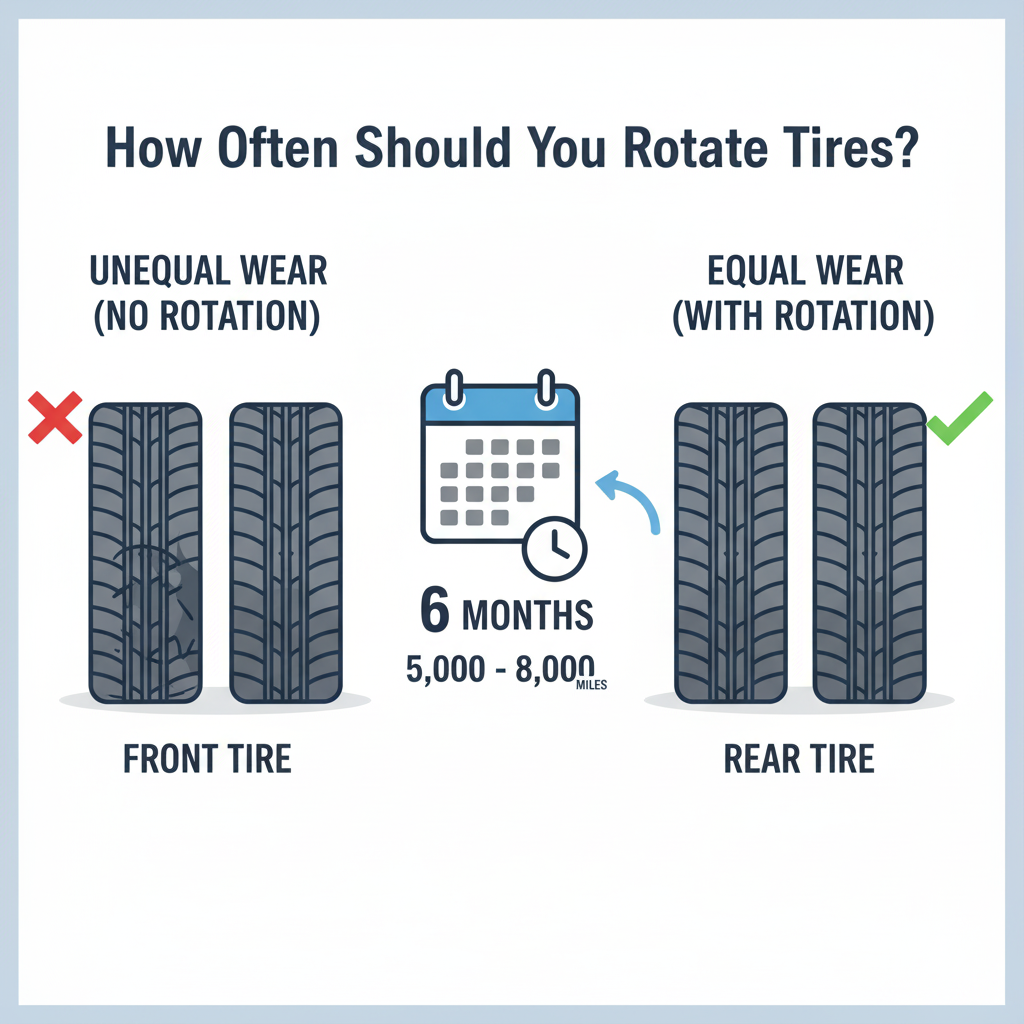
Most automotive experts and manufacturers recommend rotating your tires every 5,000 to 7,500 miles (about 8,000 to 12,000 kilometers).
General rule:
- Every 6 months or with every oil change, whichever comes first.
However, this may vary depending on:
- Vehicle type (front-wheel drive, rear-wheel drive, or all-wheel drive)
- Tire type (performance, directional, or staggered setups)
- Driving habits (aggressive driving, towing, or rough roads)
Always refer to your owner’s manual for the exact recommendation for your vehicle.
Why Tire Rotation Matters
- Even Tread Wear – Prevents one set of tires from wearing out faster than others.
- Improved Safety – Balanced traction and grip enhance braking and control.
- Better Fuel Efficiency – Evenly worn tires reduce rolling resistance.
- Extended Tire Life – Rotating tires regularly can add thousands of miles to their lifespan.
- Warranty Protection – Many tire warranties require proof of regular rotation.
Skipping tire rotations can lead to uneven tread, poor handling, and premature replacement costs.
Common Tire Rotation Patterns
The rotation pattern depends on your vehicle’s drivetrain and tire design.
1. Front-Wheel Drive (FWD)
- Move front tires straight to the rear.
- Move rear tires to the front, crossing sides (left rear → right front, right rear → left front).
2. Rear-Wheel Drive (RWD) or AWD
- Move rear tires straight to the front.
- Cross the front tires to the rear.
3. Directional Tires
- Move front tires to the rear and rear tires to the front on the same side (no crossing).
4. Staggered Tires (different front and rear sizes)
- Only switch sides if the tire type allows it; otherwise, keep them in position.
If unsure, have a professional mechanic handle it — incorrect rotation can reduce handling or damage certain tires.
Signs Your Tires Need Rotation
Even if you haven’t hit the mileage interval, look out for these signs:
- Uneven tread wear (more wear on front or one side)
- Steering wheel vibration
- Pulling to one side while driving
- Increased road noise
Catching these symptoms early can prevent bigger alignment or suspension issues.
DIY vs. Professional Tire Rotation
- DIY Rotation: Possible with the right tools (jack, stands, and torque wrench). Make sure to follow your vehicle’s correct pattern and torque specs.
- Professional Rotation: Quicker, safer, and often includes alignment and tire pressure checks. Most service centers bundle rotation with oil changes.
Consequences of Skipping Tire Rotations
Neglecting tire rotation can lead to:
- Uneven tread wear
- Reduced traction and braking power
- Shorter tire lifespan
- Increased fuel consumption
- Higher replacement costs
Even the best tires will underperform if not rotated regularly.
Conclusion: The Ideal Rotation Schedule
To keep your tires lasting longer and performing safely, rotate them every 5,000 to 7,500 miles or about twice a year. Pair rotations with oil changes or seasonal checkups for convenience. Regular tire rotation ensures balanced wear, better fuel economy, and safer driving in all conditions.
FAQs About Tire Rotation
Can I skip rotating my tires if they look fine
No. Uneven wear isn’t always visible until it’s too late — regular rotation prevents hidden imbalances.
Is rotation needed for AWD vehicles
Yes. AWD systems demand even tread depth on all tires for safe traction and balanced power distribution.
Does rotating tires affect alignment
Rotation doesn’t fix misalignment but helps reveal alignment issues through uneven wear patterns.
Can I rotate tires every oil change
Yes — this is an excellent routine if your oil changes occur around every 5,000–6,000 miles.
Should I rebalance my tires after rotating
It’s not always required, but checking balance during rotation ensures smoother driving and longer tire life.