

How Long Can You Drive on a Spare Tire: Everything You Need to Know
If you’ve ever had a flat tire in the middle of the road, you know the relief that comes when you finally install your spare. But as soon as that spare is on, the next question hits: how long can you drive on a spare tire before it becomes risky?
The short answer is—it depends on the type of spare tire you have. Some spares are built for temporary use only, while others can handle more miles. But the truth is that driving too long on a spare can compromise your safety, affect your car’s performance, and even damage vital components.
In this guide, we’ll explore everything you need to know about how long you can drive on a spare tire, how far you can safely go, and what precautions to take to protect yourself and your vehicle.
Understanding Spare Tires
Before diving into mileage limits, it’s crucial to understand the types of spare tires most vehicles carry. Not all spares are created equal, and knowing which one you have determines how long you can rely on it.
1. The Temporary “Donut” Spare Tire
This is the most common type of spare tire found in modern vehicles. It’s smaller, lighter, and meant to save space in your trunk. But because of its size and limited durability, it’s designed only for short-term use.
Typically, a donut spare should be driven no more than 50 to 70 miles and not over 50 mph. Its thinner tread and lighter construction aren’t meant for long trips, high speeds, or rough terrain.
If you rely on it longer than recommended, it can wear unevenly, overheat, or even blow out—putting you and others on the road at risk.
2. Full-Size Spare Tire
Some SUVs, trucks, and older sedans come with a full-size spare. These are essentially regular tires that match your existing set in diameter and tread pattern.
If your car has one of these, you can usually drive on it much longer—potentially thousands of miles—as long as it’s properly inflated and in good condition.
However, even with a full-size spare, you should still have the damaged tire replaced or repaired as soon as possible. Uneven tread wear between the spare and the other tires can affect alignment and handling.
3. Run-Flat Tires
Run-flat tires aren’t technically “spares,” but they serve a similar purpose. They allow you to keep driving for a limited distance after losing air pressure, usually around 50 miles at up to 50 mph.
They’re reinforced to handle short-term driving without air, but they must be replaced quickly. Continuing to drive on them after the limit can cause irreversible damage to the tire and wheel rim.
How Long Can You Drive on a Spare Tire, Really
When you ask how long can you drive on a spare tire, think of it in two ways—distance and time.
The general rule is simple: drive only as far as necessary to get the flat repaired or replaced. Spare tires are meant for emergencies, not as long-term replacements.
Here’s a breakdown:
- Donut spare: Up to 70 miles maximum.
- Full-size spare: Can last indefinitely if it matches your other tires.
- Run-flat tire: Up to 50 miles after a puncture.
However, these are ideal conditions. If you’re driving on highways, rough terrain, or in hot weather, you should replace the spare much sooner.
Why You Shouldn’t Drive Long on a Spare Tire
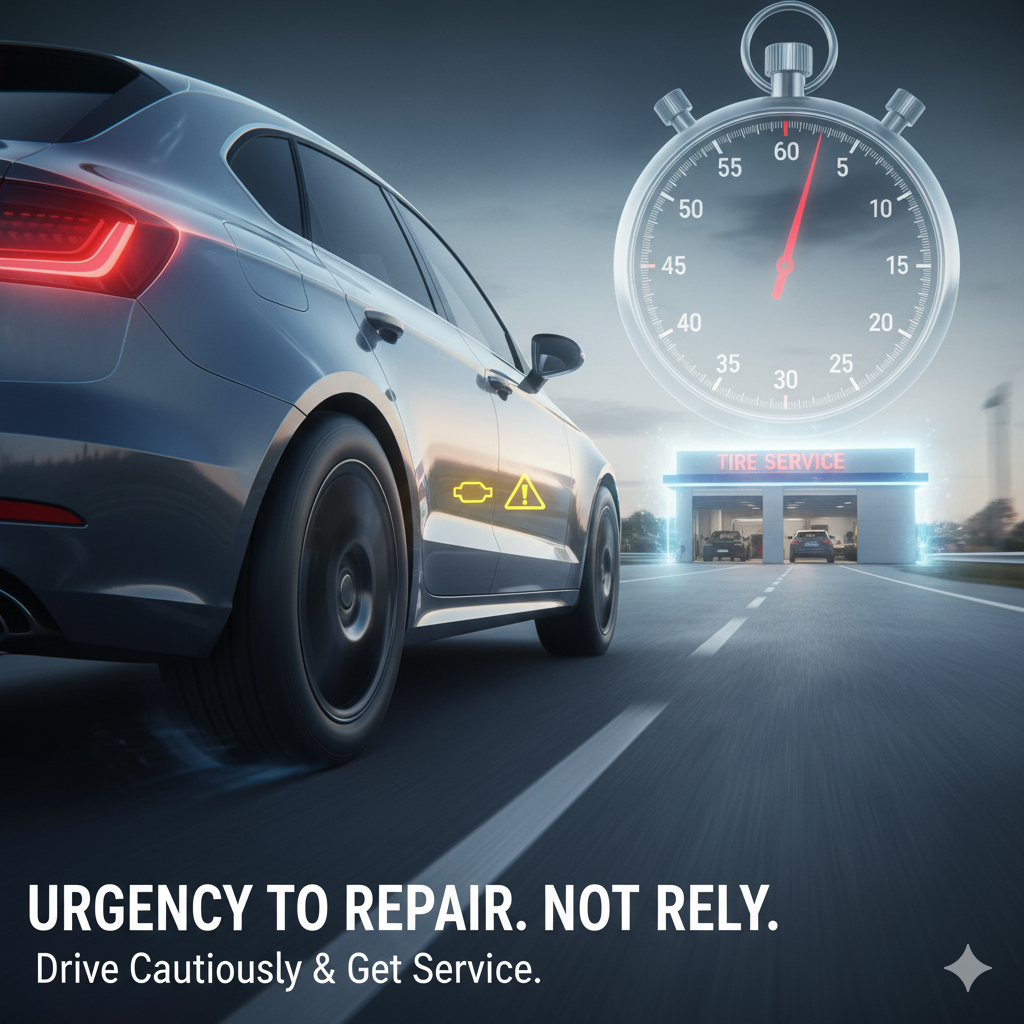
It might be tempting to stretch the life of your spare—especially when you’re busy or short on funds—but that decision can lead to costly and dangerous consequences.
Here’s why driving too long on a spare tire is a bad idea:
1. Reduced Traction and Handling
Donut spares have a smaller surface area, which means less grip on the road. This can make braking distances longer and steering less responsive. On wet or icy roads, the risk of skidding increases dramatically.
2. Strain on Other Tires
Because your spare often differs in size and tread depth, it can throw off your car’s balance. This unevenness places extra pressure on the suspension, differential, and transmission—especially in all-wheel-drive vehicles.
Driving long distances like this can lead to uneven wear or mechanical stress that costs far more than a tire replacement.
3. Limited Speed Capability
Most temporary spares are not rated for highway speeds. The recommended limit of 50 mph is not arbitrary—it’s based on the tire’s structural limits. Going faster increases the risk of heat buildup, blowouts, and loss of control.
4. Compromised Safety Features
Modern vehicles rely heavily on systems like ABS, traction control, and stability management. These systems assume all four tires have similar grip and performance characteristics. A spare tire disrupts that balance, potentially limiting the effectiveness of your safety systems.
Signs You’ve Driven Too Long on a Spare Tire
If you’re unsure whether you’ve exceeded the safe limit, watch out for these warning signs:
- Vibration or wobbling: Indicates uneven wear or imbalance.
- Unusual noises: Whining or grinding could mean stress on your drivetrain.
- Difficulty steering: Reduced responsiveness can mean the spare is worn out.
- Uneven car height: If the car leans, your spare may be deflating or failing.
If you notice any of these, stop driving immediately and have your vehicle inspected.
How to Extend the Life of a Spare Tire (Safely)
While spare tires aren’t built for longevity, you can take steps to use them safely within their limits.
Check Air Pressure Regularly
Most people forget to inspect their spares until they need them—and by then, they’re often underinflated. Check your spare tire’s pressure at least every few months and keep it inflated to the manufacturer’s recommended PSI.
Store It Properly
If your spare is mounted under your car or in the trunk, make sure it’s not exposed to excessive heat, moisture, or debris. Corrosion and aging can weaken the rubber even before you use it.
Use It Only When Necessary
Your spare isn’t a fifth tire—it’s a lifeline. Rely on it only when you have no other choice. Once your main tire is repaired or replaced, return the spare to storage immediately.
Driving Habits While on a Spare Tire
When you’re driving on a spare, your car’s handling changes. To stay safe:
- Avoid sudden acceleration or braking.
- Take turns slowly and carefully.
- Keep to city streets instead of highways when possible.
- Don’t tow heavy loads or drive long stretches.
Treat the situation as temporary. The goal isn’t to get comfortable—it’s to get home or to the nearest tire shop.
What Happens If You Drive Too Far on a Spare
Ignoring the limits can have real consequences:
- Tire blowout: The thin rubber of a donut spare can overheat quickly.
- Wheel damage: The rim may bend or crack if the tire collapses.
- Alignment issues: Uneven tire sizes can throw off wheel alignment.
- Suspension wear: Long-term imbalance can damage shocks and struts.
What starts as a quick fix can end up costing hundreds—or even thousands—of dollars.
Replacing Your Spare After Use
Once you’ve used your spare, especially a temporary donut, don’t store it back and forget about it. It’s meant for limited use and may not be safe for another emergency.
Always have it inspected or replaced. If it’s old, worn, or cracked, invest in a new one. A good spare tire can make the difference between a short inconvenience and a serious accident.
How to Prepare for Flat Tire Emergencies
Preparation can turn a stressful roadside problem into a manageable situation. Here’s how to stay ready:
- Know where your spare is and how to access it.
- Keep a tire jack and lug wrench in your trunk.
- Carry a flashlight for night emergencies.
- Check your spare’s pressure regularly.
- Consider a portable tire inflator for extra safety.
Knowing what to do when a flat happens saves time—and possibly your life.
The Role of Tire Maintenance in Avoiding Flats
One of the best ways to avoid relying on your spare is to take care of your regular tires. Proper maintenance includes:
- Checking tread depth regularly.
- Rotating tires every 5,000–8,000 miles.
- Ensuring balanced alignment.
- Avoiding curbs and potholes that can cause sidewall damage.
A little attention today prevents major headaches tomorrow.
Understanding Spare Tire Expiration
Yes, spare tires expire—even if they’ve never been used. Rubber degrades over time, and most manufacturers recommend replacing spares every 6 to 10 years regardless of appearance.
You can check the manufacturing date on the sidewall (DOT code). The last four digits show the week and year it was made. For example, “2318” means it was produced in the 23rd week of 2018.
What to Do If You Don’t Have a Spare Tire
Many modern cars no longer come with spare tires. Instead, they include tire repair kits or sealant systems. While convenient, these are only temporary fixes for small punctures—not full blowouts.
If your car lacks a spare, consider buying one separately. Compact or full-size spares are available for most models and offer peace of mind on long trips.
Professional Advice: Replace Sooner Than Later
Mechanics and tire experts agree that while how long you can drive on a spare tire depends on type and condition, it’s best to replace it within 24–48 hours of use.
Even if it feels stable, the design limitations make it unsafe for extended use. The longer you delay, the higher your risk of additional mechanical issues or tire failure.
The Psychological Trap of Temporary Comfort
There’s also a mindset factor. Once the car feels “fine” on the spare, it’s easy to procrastinate fixing the main tire. But this false sense of normalcy leads to negligence.
Remember: a spare isn’t security—it’s survival. It’s not built for endurance but for emergency escape. Treat it accordingly.
Driving on a Spare in Different Conditions
Different environments affect how long a spare lasts.
In Hot Weather
Heat accelerates rubber breakdown and air loss. Check your pressure more often and avoid long drives.
In Cold Weather
Cold reduces tire flexibility, which can cause cracking or brittleness. Drive slowly and check for pressure drops.
On Highways
Sustained high speeds increase friction and heat. Avoid highway driving on a donut spare unless absolutely necessary.
On Rough Roads
Gravel or uneven terrain can quickly wear down a small spare. Stick to smoother routes if possible.
When to Upgrade Your Spare Tire Setup
If your car came with a donut spare, consider upgrading to a full-size version—especially if you drive long distances or live in areas with limited service access.
Having a reliable spare saves time, stress, and potential danger when a flat occurs miles from help.
Conclusion: How Long Can You Drive on a Spare Tire
So, how long can you drive on a spare tire? The safe answer is: as little as possible.
Temporary donut spares should not exceed 70 miles or 50 mph, while full-size spares can last longer but still require timely replacement or repair of the original tire.
Driving too long on a spare risks your safety, damages your car, and can turn a minor inconvenience into a major expense.
Your spare is a lifeline—not a long-term fix. Treat it as a short bridge to safety, not a substitute for maintenance.
FAQs About How Long You Can Drive on a Spare Tire
Can I drive 100 miles on a spare tire
No, it’s not recommended. Donut spares are designed for up to 70 miles maximum. Beyond that, the risk of blowout increases.
Can I go 60 mph on a spare tire
You should stay below 50 mph when using a temporary spare. Higher speeds generate excessive heat and pressure.
Is it okay to drive on a spare for a week
It’s possible, but not safe. Even if the tire seems fine, prolonged use stresses your car’s suspension and alignment.
Do spare tires lose air over time
Yes. Like regular tires, spares gradually lose pressure. Check them regularly even if unused.
Can I repair a donut spare if it gets damaged
No. Temporary spares aren’t designed for repair. Replace them if punctured or worn.
Should I replace a full-size spare after using it
If it’s in good shape and matches the others, you can keep it. Just rotate and inspect it regularly.