Authentic Burrata Cheese Recipe: Make Creamy Italian Cheese at Home
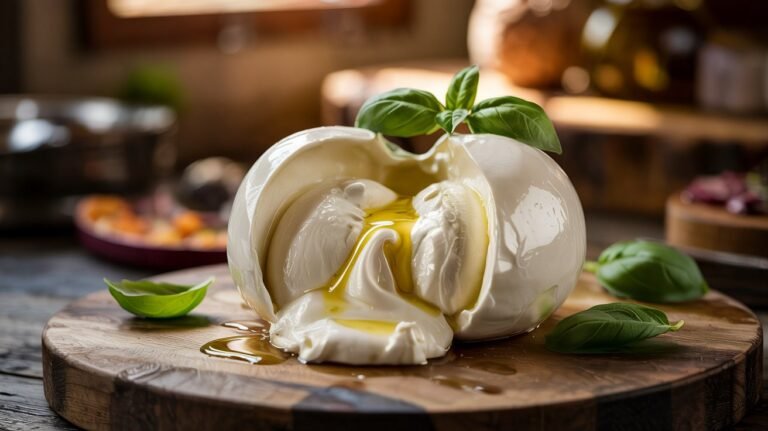
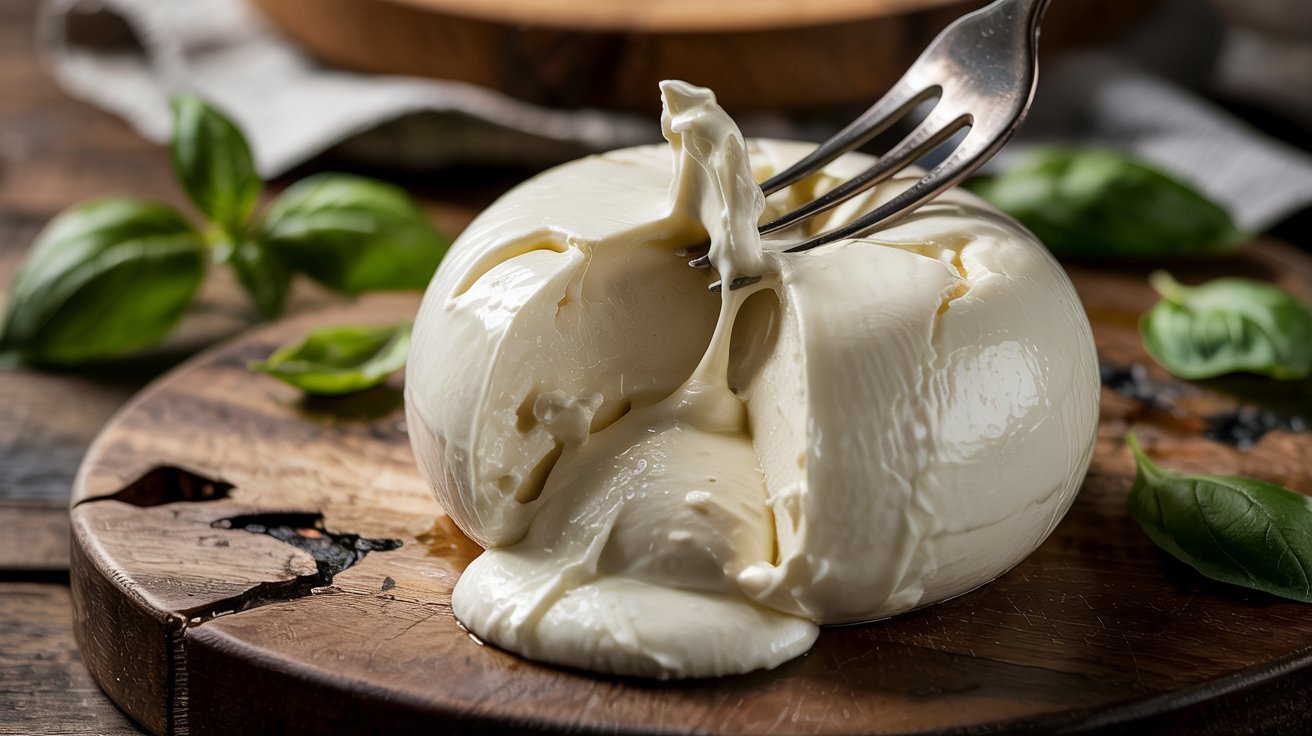
Have you ever sat down at a fancy Italian restaurant and seen a beautiful white ball of cheese on a plate? When you poke it with a fork, a rich, buttery cream spills out like a delicious secret. That, my friend, is burrata! It is one of the most loved treats in the world of food. Many people think it is magic, but I am going to show you how to make it right in your own kitchen. This burrata cheese recipe is surprisingly simple once you know the steps.
Making cheese at home might sound scary, but think of it like a fun science project you can eat. You only need a few basic ingredients and a little bit of patience. We are going to take fresh milk and turn it into a soft, stretchy shell. Then, we will fill that shell with more cheese and cream. The result is a cloud-like snack that tastes better than anything you can buy at the store. Let’s get our aprons on and start this cheesy adventure together!
What Exactly Is Burrata Cheese?
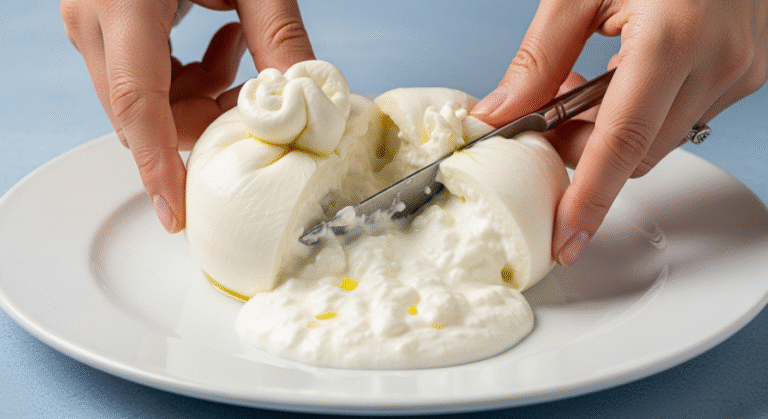
Before we dive into our burrata cheese recipe, let’s talk about what makes this cheese so special. The name “burrata” actually comes from the Italian word for “buttered.” That is the perfect way to describe it! It looks like a regular ball of mozzarella on the outside. However, the inside is filled with something called stracciatella. This is just a fancy name for shredded cheese mixed with thick, luscious cream.
This cheese was born in the Puglia region of Southern Italy about a hundred years ago. Local farmers didn’t want to waste any leftover bits of mozzarella, so they stuffed them inside a pouch with cream. It was a clever way to save food that turned into a world-famous delicacy. When you follow this burrata cheese recipe, you are actually practicing a very old and respected Italian tradition. It is a “people-first” food that brings joy to any dinner table.
The Ultimate Burrata Biography Table
| Feature | Details |
| Origin | Puglia, Italy (Town of Andria) |
| Primary Ingredients | Cow’s milk (or Buffalo), Cream, Rennet, Citric Acid |
| Texture | Soft, elastic shell with a liquid, creamy center |
| Flavor Profile | Milky, buttery, mild, and slightly salty |
| Best Serving Temp | Room Temperature (Take out 30 mins before eating) |
| Shelf Life | Best within 24–48 hours; up to 5 days in brine |
| Common Pairings | Tomatoes, Basil, Crusty Bread, Prosciutto, Olive Oil |
Gathering Your Cheese Making Tools
To have success with your burrata cheese recipe, you need to be prepared. You don’t need a lab, but a few specific tools will make your life much easier. First, grab a large stainless steel pot. You will also need a very accurate digital thermometer. Temperature is the most important part of making cheese! If the milk is too cold, it won’t set. If it’s too hot, the cheese becomes tough like rubber.
You will also need a long knife to cut the curds and a slotted spoon to scoop them out. I highly recommend wearing clean kitchen gloves. Why? Because we will be working with hot water to stretch the cheese, and you don’t want to burn your fingers! Having everything ready on your counter before you start will keep you calm and focused. Trust me, a tidy workspace leads to a much better burrata cheese recipe result.
The Secret Ingredients You Will Need
Let’s talk about what goes into your burrata cheese recipe. The most important thing is the milk. You must use “High Quality” whole milk that is not ultra-pasteurized. If the carton says “UHT” or “Ultra-Pasteurized,” the cheese will not form a solid ball. It will just stay as a liquid mess. Look for local farm milk or organic milk that is gently pasteurized for the best results.
Besides milk, you need citric acid and liquid rennet. These are the “magic” parts that turn the liquid milk into solid curds. You can find these easily online or at specialty food stores. You will also need some heavy cream for that “buttery” center we all love. Don’t forget the salt! Salt brings out all the milky flavors. Using these fresh, simple ingredients ensures your burrata cheese recipe follows the highest standards of quality and taste.
Step 1: Preparing the Milk Base
The first real step in our burrata cheese recipe is heating the milk. Pour one gallon of cold milk into your pot. Dissolve your citric acid in a little bit of water and stir it into the milk. This makes the milk slightly acidic, which helps it stretch later. Now, turn the stove to medium-low heat. We want to warm the milk slowly until it reaches exactly 90°F.
While the milk is heating, keep stirring it gently so it doesn’t burn at the bottom. Once it hits the right temperature, take it off the heat. Now, add your diluted rennet. Stir it in a circular motion for about thirty seconds, then stop the liquid from moving. Cover the pot and let it sit for about ten to fifteen minutes. This is where the magic happens! The milk will turn into a firm, jelly-like substance called the “curd.”
Step 2: Cutting and Cooking the Curds
After your milk has rested, check it with a knife. If it feels like soft tofu and makes a clean cut, you are ready to move on with the burrata cheese recipe. Use your long knife to cut the curd into one-inch squares. This helps separate the solid cheese from the liquid whey. It’s a very satisfying part of the process! Once cut, put the pot back on the stove and heat it slowly to 105°F.
Gently stir the curds as they warm up. You will see them start to shrink and get a bit firmer. This step is vital for the texture of your burrata cheese recipe. If you want a softer shell, don’t overcook them. Once they reach the temperature, let them sit for a few more minutes. Then, use your slotted spoon to move the curds into a bowl. Save some of that liquid whey; we can use it to keep the cheese moist later!
Step 3: Making the Creamy Stracciatella Filling
Now we get to make the “heart” of our burrata cheese recipe. Take about one-fourth of your fresh curds and put them in a separate bowl. Tear these curds into very small, thin shreds with your hands. This is the “stracciatella.” The word actually means “shredded” or “ragged.” It’s meant to look messy and rustic, so don’t worry about making it perfect!
Pour your heavy cream over these shreds and add a generous pinch of salt. Stir it all together until it looks like thick, creamy cottage cheese. This mixture is what makes the burrata cheese recipe so much better than regular mozzarella. Set this bowl aside in the fridge while we work on the outer shells. Having the filling cold makes it much easier to stuff inside the warm cheese later on without it melting away.
Step 4: Stretching the Mozzarella Shell
This is the part of the burrata cheese recipe where you get to be an artist! Take the rest of your curds and put them in a bowl of very hot water (around 150°F). After a minute, the curds will become soft and stretchy. Put on your gloves and start pulling and folding the cheese. It should become shiny and smooth, like a piece of satin. If it gets hard to stretch, just dip it back into the hot water for a few seconds.
Once the cheese is perfectly smooth, pull off a piece and flatten it into a circle. You want the edges to be a bit thinner than the middle. Think of it like making a small pizza dough in your hand. This circle will become the pouch for your burrata cheese recipe. This “experience-based” technique takes a little practice, but once you feel the cheese soften under your fingers, you will know exactly what to do.
Step 5: Stuffing and Sealing the Ball
We are almost at the finish line of our burrata cheese recipe! Place your flat cheese circle over a small bowl or even the “C” shape of your hand. Carefully spoon a big dollop of that creamy filling we made earlier into the center. Don’t overfill it, or it will be hard to close! Now, bring the edges of the cheese together at the top, like you are closing a little drawstring bag.
Pinch the top very tightly to seal the cream inside. If it won’t stick, dip the pinched end into the hot water for a second to melt it shut. Immediately drop the finished ball into a bowl of cold water. This “shocks” the cheese and helps it hold its beautiful round shape. Congratulations, you just completed a real burrata cheese recipe! You now have a fresh, handmade treasure that is ready to be the star of your next meal.
Expert Tips for Serving Your Masterpiece
Now that you have mastered the burrata cheese recipe, you need to know how to eat it properly. Never eat burrata straight from the fridge! It needs to sit at room temperature for at least 30 minutes. This allows the creamy center to become liquid and the flavors to fully wake up. If it’s too cold, the inside will stay stiff, and you’ll miss out on that iconic “ooze.”
I love serving mine on a big platter with ripe heirloom tomatoes and fresh basil leaves. Drizzle a lot of high-quality extra virgin olive oil over the top and add a sprinkle of flaky sea salt. It is also amazing on top of a warm pizza or swirled into a bowl of pasta. The contrast of the cool, creamy cheese against warm food is heaven. This burrata cheese recipe is so versatile that you can even serve it with sweet things like peaches and honey!
Conclusion: Share the Cheesy Love
There you have it—your very own, hand-crafted burrata cheese recipe. You have gone from a gallon of milk to a gourmet Italian delicacy. It’s a skill that will surely impress your friends and family at any gathering. More importantly, it connects you to the joy of making food from scratch. There is something truly special about cutting into a cheese ball that you made with your own two hands.
I hope this guide was helpful and easy to follow. Remember, even if your first ball isn’t perfectly round, it will still taste incredible! The beauty of a home burrata cheese recipe is in its rustic, handmade charm. Now, go grab some crusty bread and enjoy the fruits of your labor. If you enjoyed this, please share your results with me. I would love to hear how your cheesy adventure turned out!
Frequently Asked Questions (FAQs)
1. Can I use store-bought mozzarella to make this burrata cheese recipe?
Yes, you can! If you don’t want to make curds from scratch, buy a ball of “fresh mozzarella in water.” Scoop out the middle to make a shell and shred the insides with cream to make the filling.
2. Why did my cheese turn out rubbery?
Usually, this happens if the milk was heated too quickly or if the curds were cooked at too high a temperature. For a perfect burrata cheese recipe, keep the heat low and slow.
3. How long does homemade burrata last?
It is best eaten the day you make it! However, you can keep it in a container of salted water (brine) in the fridge for up to 5 days.
4. What is the difference between mozzarella and burrata?
Mozzarella is a solid ball of stretched cheese. Burrata uses that same cheese as a shell but is filled with a soft mixture of cream and shreds.
5. Do I have to use rennet for this burrata cheese recipe?
Yes, rennet is necessary to create the firm curds that allow the cheese to be stretched. You can find vegetarian rennet if you prefer!
6. Can I freeze my finished burrata?
I wouldn’t recommend it. Freezing ruins the delicate texture of the cream and makes the shell grainy. It’s much better to enjoy it fresh.